
Renting out your Lombok villa can be one of the most rewarding ways to earn passive income as a foreign owner — but only if you manage the short-term rental side correctly.
Owning a Villa in Lombok Is One Thing. Making It Work for You Is Another.
Buying a villa in Lombok — particularly inside the Mandalika Special Economic Zone — is increasingly straightforward for international buyers using the correct legal structure. Running that villa as a productive short-term rental asset is a different skill set entirely. Licensing, operator selection, platform visibility, pricing strategy, and cost control all determine whether your asset generates meaningful projected gross yield or simply covers its own running costs.
This guide is written for foreign owners who already understand the ownership structure (PT PMA, HGB title up to 80 years) and want practical, honest information about what happens after the keys are in hand.

Step One: Get the Right Operating Licenses
Indonesia distinguishes between a private dwelling and a commercial accommodation business. If you intend to list your villa on Airbnb, Booking.com, or any other platform and receive payment from guests, you are operating a business — and the Indonesian government treats it accordingly.
The core licenses a villa rental operation typically requires include:
- NIB (Nomor Induk Berusaha): A single business identification number issued through the OSS (Online Single Submission) system. This is the starting point for any commercial activity.
- Pondok Wisata or Villa classification: A tourism accommodation classification issued by the relevant regional tourism office (Dinas Pariwisata). The category depends on the number of units and facilities offered.
- NPWP (Tax Registration Number): Your PT PMA will already hold this, but it must be active and correctly categorised for accommodation rental income.
Operating without these licenses exposes you to fines and, more practically, makes it impossible to work with reputable local property management companies who will require compliant documentation before signing a management agreement.
Requirements can shift with regional regulation updates, so always confirm current obligations with a licensed Indonesian notary or property lawyer before listing.
Step Two: Choose Your Management Model
Foreign owners living outside Indonesia almost always need a local management partner. There are broadly three models in use across South Lombok today.
Full-Service Management Companies
These operators handle everything: reservations, guest communications, check-in, housekeeping, maintenance, and monthly owner reporting. They typically charge between 20% and 35% of gross rental revenue. The range reflects the level of service, the operator’s track record, and whether marketing costs are included or billed separately.
For owners of premium stone villas targeting high-value guests, a full-service operator with an established network in the European and Australian markets tends to deliver better occupancy outcomes than self-management via a local caretaker.
Hybrid Models
Some owners use a local caretaker for day-to-day operations while contracting a specialist for reservations and channel management. This can reduce management fees but requires closer owner involvement and clear accountability structures between the two parties.
Developer-Linked Management Programmes
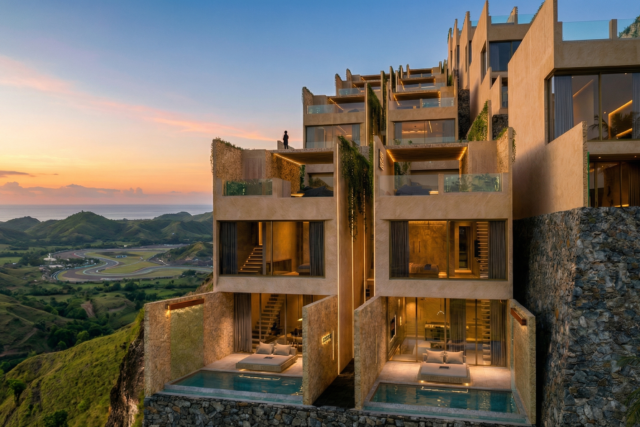
Several Lombok developments — including boutique projects like LITHOS by Razzaque Estates in Kuta Mandalika — offer integrated rental management as part of the ownership proposition. This is worth examining carefully: understand exactly what is included, what the fee structure is, whether the programme is optional or obligatory, and how exit terms work if you wish to change operators later.
Step Three: Understand Your Cost Base Before Projecting Income
Projected gross yield figures — the ratio of annual rental revenue to purchase price — are a useful comparison tool, but they can obscure the cost reality of running a villa. Before placing weight on any yield projection, map out your annual operating cost base:
- Management fees (20–35% of revenue)
- Platform commissions (typically 3–15% depending on the channel)
- Utilities (electricity in Indonesia is metered; pool pumps and air conditioning are the dominant costs)
- Routine maintenance and gardening
- Annual deep clean and linen/fixture replacement
- Indonesian income tax on rental revenue (subject to PT PMA tax obligations — consult a local tax advisor)
- Annual PT PMA compliance costs (accounting, reporting, director fees if applicable)
Net yield after all operating costs is the figure that actually matters for financial planning. Gross yield projections of 8–14% are commonly cited across Lombok’s villa market; net figures after costs are typically materially lower, though the gap varies significantly by property type, location, and operator efficiency.
Step Four: Pricing and Seasonality in the Mandalika Market
Lombok’s short-term rental market has two clear high seasons: the dry season peak from approximately June to September, which aligns with European summer travel, and the MotoGP and World Superbike event calendar at the Mandalika International Street Circuit, which generates intense short-burst demand with nightly rates for well-positioned villas reaching multiples of standard rates.
Shoulder seasons (October–November, March–April) increasingly attract digital nomads and long-stay guests seeking lower rates and uncrowded beaches. Monthly rental rates for well-furnished villas in Kuta Mandalika during these periods can help sustain year-round occupancy if your management operator actively targets this segment.
Dynamic pricing tools — the same revenue management software used by hotels — are now accessible to villa operators and can materially improve annual revenue compared to fixed-rate pricing. Ask any management company you evaluate whether they use dynamic pricing or set static seasonal rates.
Step Five: Guest Experience Drives Reviews, Reviews Drive Occupancy
In the short-term rental market, review scores on Airbnb and Booking.com function as a direct input to search ranking algorithms. A villa with a consistent 4.9-star rating will outperform an equivalent property rated 4.5 — often by a significant margin in booking volume.
For stone villas and luxury properties in particular, guest expectations are high. Fast Wi-Fi, reliable air conditioning, a well-maintained pool, and a responsive local contact number are baseline requirements. Photography quality, listing copy, and accurate representation of the property are equally important — misleading listings generate negative reviews regardless of property quality.
A Realistic Mindset for Foreign Villa Owners
Short-term rental income from a Lombok villa can contribute meaningfully to the total return on a property investment over a lease term. It is not passive income in any straightforward sense — it requires ongoing attention, the right professional partners, and compliance with Indonesian tax and licensing obligations.
The owners who report the best outcomes combine a high-quality, well-located asset with a professional management operator, realistic cost accounting, and a long-term perspective on the Mandalika market’s continued development. That combination, rather than any single projected yield figure, is the more reliable basis for an investment decision.