
The Second Challenge: From Villa Owner to Asset Manager
Villa asset management is what separates a holiday home that drains money from a property that performs. For the international investor, the journey to acquiring a luxury villa in Lombok is often a meticulous process of legal due diligence, market analysis, and design selection. Securing the keys, however, marks not an end but a beginning. The true measure of a successful property investment, particularly when managed from afar, lies in the subsequent operational phase. Owning the asset is the first challenge; managing it effectively is the second, and arguably, the more critical one for long-term value preservation and yield optimisation.
Effective villa asset management transforms a beautiful property from a potential liability into a high-performing, self-sustaining investment. It’s the invisible framework that ensures your villa weathers the tropical climate, delights its guests, and remains compliant with local regulations. This guide outlines the core pillars of long-term villa asset management in Lombok, designed for the discerning foreign owner.
The Core Pillars of Villa Asset Management in Lombok
Managing a property in a tropical environment requires a proactive, systematic approach. The humidity, salt-laden air, and intense UV radiation are unforgiving to poorly maintained structures. A comprehensive management strategy is built on three essential pillars.
1. Proactive Physical Maintenance
Reactive maintenance, fixing things as they break, is a costly and inefficient strategy in Lombok. A preventative schedule is paramount to protecting the physical integrity and aesthetic appeal of your villa. A typical schedule should include:
- Quarterly Servicing: Air conditioning units are non-negotiable for guest comfort and are susceptible to mould and corrosion. Regular cleaning of filters and servicing of condensers is essential. Water pumps and filtration systems should also be inspected.
- Bi-Annual Inspections: A thorough check of the roof for any displaced tiles or potential leaks is crucial, especially before and after the rainy season. Inspecting all timber elements (decks, pergolas, furniture) for termites and weather damage, followed by re-staining or sealing, is also vital.
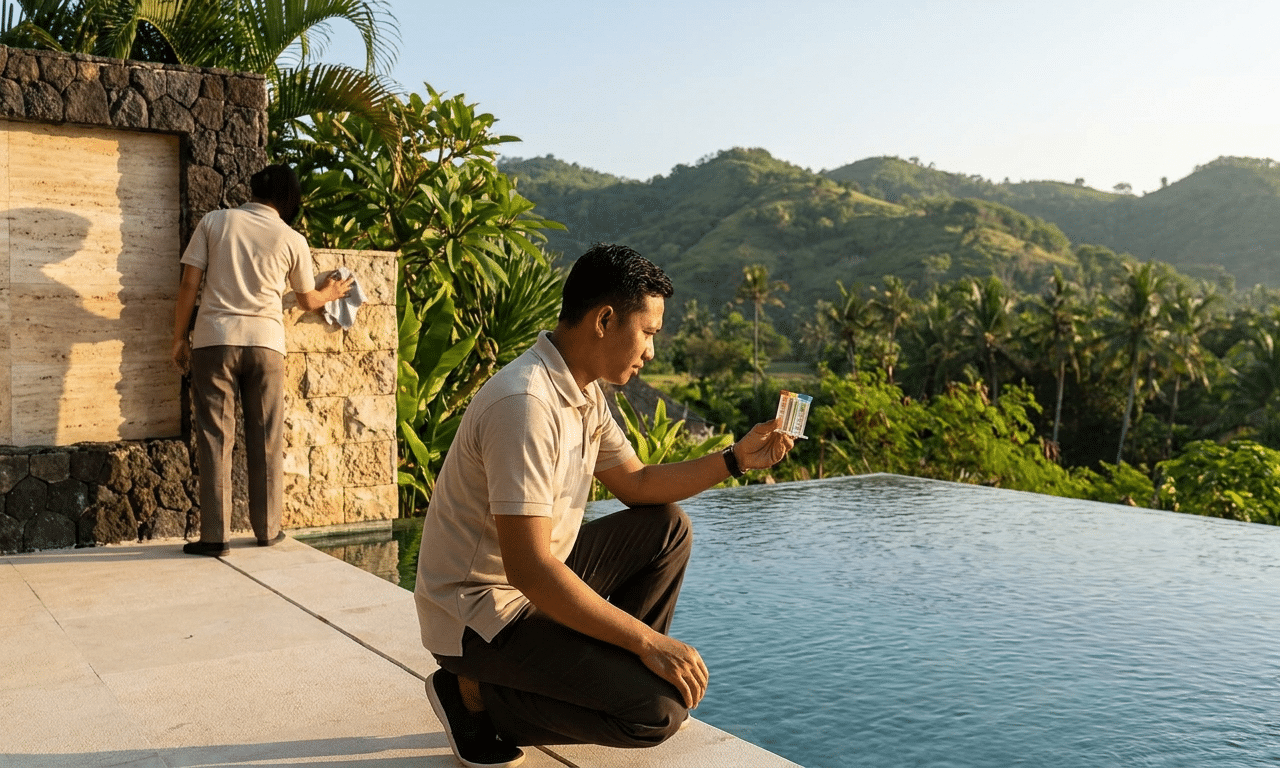
- Annual Deep Checks: This includes professional pest control services, checking electrical wiring and safety switches, and servicing swimming pool equipment like pumps and filters to prevent costly failures.
This proactive approach not only prevents expensive emergency repairs but also contributes significantly to the villa’s resale value by demonstrating a history of meticulous care.
2. Professional Staffing and Human Resources
Your on-the-ground team is the lifeblood of your investment. They deliver the guest experience and execute the daily upkeep. Key roles typically include a villa manager or host, housekeeping staff, and a gardener/pool technician. For foreign owners, navigating Indonesian labour laws and cultural norms can be complex. Professional villa asset management involves:
- Fair Compensation: Paying competitive local wages and adhering to regulations regarding working hours and overtime.
- Legal Compliance: Ensuring staff are registered for BPJS (Indonesia’s mandatory health and social security system). This is not just a legal requirement but a mark of a responsible employer.
- Training and Standards: Implementing clear standard operating procedures (SOPs) for everything from cleaning protocols to guest interaction ensures a consistently high level of service.
3. Diligent Financial and Administrative Oversight
Beyond the glamour of infinity pools and ocean views lies the reality of administrative duties. For foreign investors operating through a PT PMA (Foreign-Owned Company), meticulous financial records are a legal necessity. Key administrative tasks include:
- Utility Management: Timely payment of electricity (PLN), water, and internet bills.
- Tax Compliance: Annual payment of PBB (Pajak Bumi dan Bangunan – Land and Building Tax) and ensuring all rental income is correctly declared through the PT PMA for corporate income tax purposes.
- Bookkeeping: Maintaining transparent records of all operational expenses and revenue, which is crucial for calculating accurate projected gross yields and for eventual resale.
Choosing Your Management Model
Foreign investors in Lombok typically adopt one of two primary villa asset management structures, each with distinct advantages and challenges.
The Full-Service Estate Management Approach
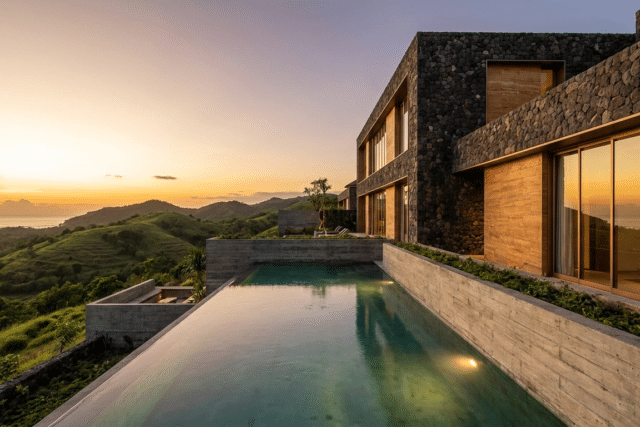
For investors seeking a genuinely passive experience, integrated estate management is the superior model. This is common in high-end, multi-unit developments where a single, professional entity oversees all aspects of operations for the entire complex. The benefits include economies of scale for services like security and landscaping, consistently high service standards across all units, and a single, accountable point of contact for the owner. This integrated approach is central to the philosophy behind developments that prioritize investor peace of mind. For instance, the operational framework for the LITHOS stone villas in Mandalika is designed to handle all aspects of asset management, from guest services to structural upkeep, allowing owners to focus on the returns rather than the routine.
The Self-Managed or Hybrid Approach
Some hands-on investors may choose to manage their property directly, hiring staff and coordinating maintenance from abroad. This model offers more direct control but demands a significant investment of time and a deep well of reliable local contacts. The challenges are considerable: navigating language barriers, managing staff remotely, and dealing with emergencies across different time zones. A hybrid approach, where an owner hires an independent villa management company, can mitigate some of these risks, but vetting and overseeing that third-party manager becomes a crucial task in itself.
Protecting Your Investment for the Long Term
Ultimately, successful property investment in Lombok extends far beyond the initial purchase. The legal structure for foreign ownership—typically a PT PMA holding a long-term leasehold title (HGB, or Hak Guna Bangunan, which can extend up to 80 years)—is designed not just for acquisition but for ongoing commercial operation. Fulfilling the responsibilities of this structure through diligent, professional management is the key to unlocking the full potential of your asset.
By focusing on a robust framework of preventative maintenance, professional staffing, and transparent financial administration, you ensure your Lombok villa remains a source of pride and a valuable, appreciating asset for decades to come.