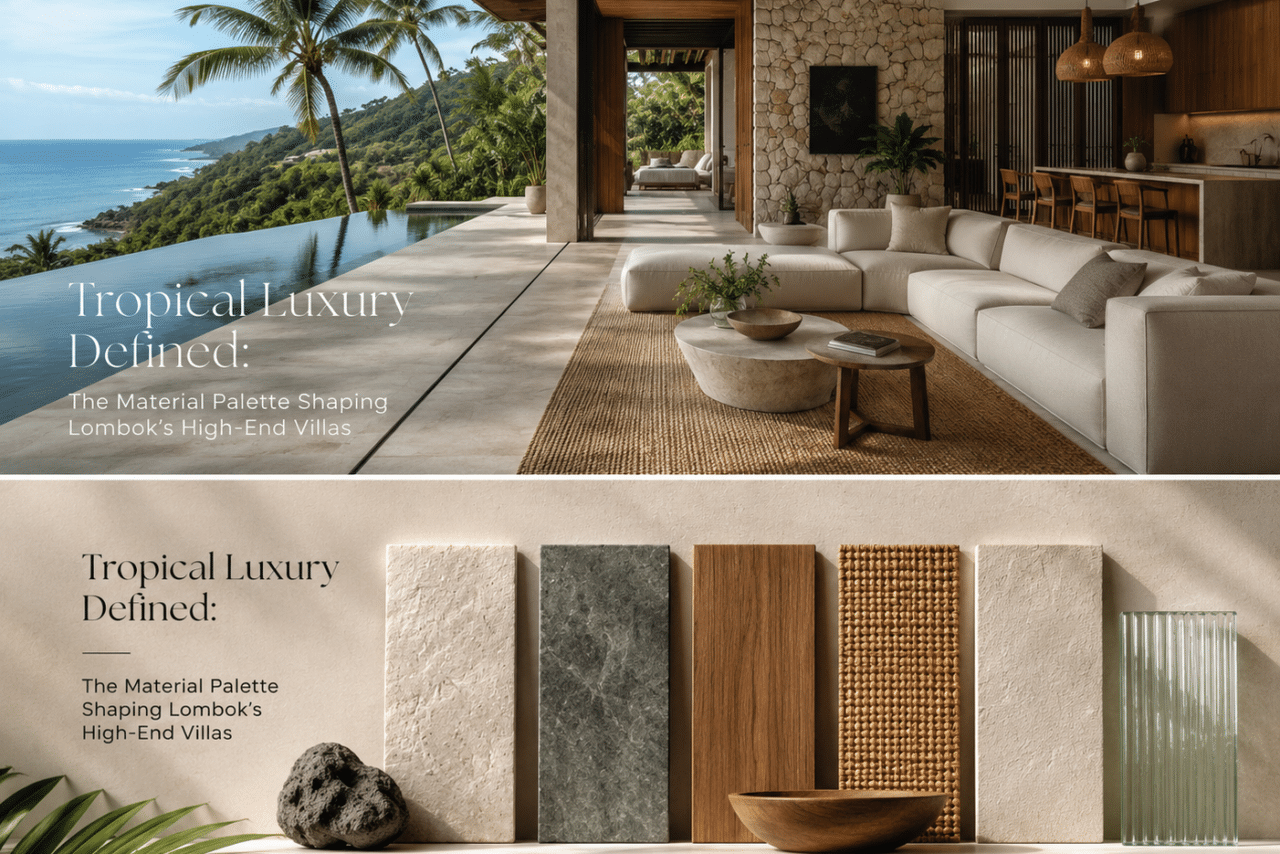

For two decades, the visual language of “tropical luxury” in Indonesia was set by a particular generation of Bali villas: thatch roofs, dark teak, tropical greenery overflowing every edge, statement art, infinity pools framing rice paddies. It was a powerful aesthetic, and it sold a generation of properties. But it is also, in 2026, a dated one.
The high-end villa being commissioned today in Lombok looks fundamentally different. The shift is not a matter of fashion. It reflects a more mature understanding of what luxury actually means: not abundance, but restraint. Not exotic, but considered. Not decorative, but material.
This article walks through the palette defining the new generation of Lombok luxury villas — the materials, finishes, and architectural choices that distinguish a 2026 build from a 2010 one, and why they matter for anyone designing, building, or buying at the top of the market.
The Underlying Shift
The new tropical luxury is anchored in what design discipline calls material truth — the idea that surfaces should reveal what they actually are, not pretend to be something else. Concrete looks like concrete. Stone looks like stone. Wood is left as wood. The result is calmer, slower, and more durable, both visually and physically.
This aesthetic also reads more naturally to the European and Asian sophisticated buyer who has spent two decades in stripped-back Tokyo apartments, Mediterranean stone houses, or Antwerp design hotels. It speaks an international design language, rather than a regional cliché.
Limestone and Travertine
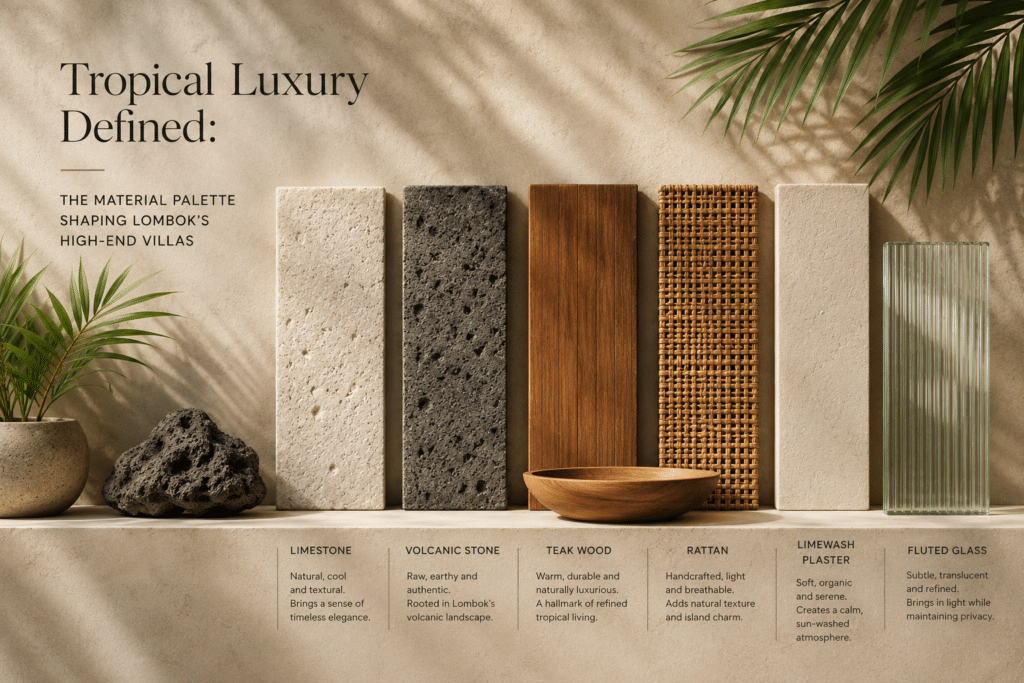
Pale, naturally veined stone has replaced dark teak as the signature material of the new luxury. Limestone floors — honed rather than polished — bring a soft, chalky elegance that grounds a space without darkening it. Travertine, with its layered banding and warm tones, is increasingly used as a hero material: full bathroom walls, freestanding bathtubs carved from single blocks, vanity counters, sometimes entire pool surrounds.
The appeal is partly aesthetic and partly experiential. Stone is cool to the touch in a tropical climate, ages gracefully rather than degrading, and connects a building to a sense of permanence that timber alone cannot deliver.
Board-Formed Concrete
Where contemporary luxury once relied on smooth render, it now embraces board-formed concrete — concrete cast against rough timber boards that imprint their grain, knots, and irregularities into the finished surface. The result is a wall that is unmistakably concrete, but warm and tactile rather than sterile.
Board-formed concrete is technically demanding to execute well — it cannot be patched or refinished if it goes wrong — which is precisely why it signals a quality of craftsmanship that less expert builders cannot replicate.
Bleached and Sustainable Timber
Timber has not disappeared from the new palette; it has been recalibrated. Dark, heavy ironwood and teak are out. Bleached teak, light oak, and engineered tropical hardwoods from certified sustainable sources are in. The shift is partly aesthetic (lighter timbers expand and brighten interior space) and partly ethical — buyers in 2026 ask where their wood came from, and the answer matters.
Application is also more disciplined. Rather than wrapping every surface in timber, the new approach uses wood as a focused gesture: a feature ceiling, a stair, a built-in bench, a single wall.
Limewash and Mineral Plasters
Painted walls — particularly white painted walls — read as cheap in 2026. The high-end alternative is limewashed plaster, tadelakt, or mineral-based finishes that deliver a soft, mottled, textured surface that catches light differently as the day moves. These finishes are labor-intensive and require skilled artisans, which both raises their cost and underwrites their luxury status.
The colors typically chosen — bone, beige, warm grey, soft chalk — coordinate with the stone and concrete palette and avoid the overly saturated tones that dated the previous generation of villas.
Bronze and Patinated Metals
Hardware, fixtures, and accents in aged bronze, patinated brass, and antique copper have largely replaced polished chrome and stainless steel at the top of the market. These metals develop character with age. They are also unmistakably premium — the cost of well-made bronze hardware is several multiples that of mass-market alternatives, and the difference is felt in the hand every time a door is opened.
A single bronze door pull, correctly designed, can elevate a space the way a piece of jewelry elevates an outfit.
Considered Negative Space
Beyond materials, the most important element of the new tropical luxury is what the Japanese call Ma — purposeful negative space. The instinct of mid-market design is to fill every surface and every corner. The instinct of high-end design is to leave deliberate emptiness, allowing the materials and architecture to breathe.
A thoughtfully designed villa in 2026 may have fewer pieces of furniture, fewer wall hangings, fewer decorative gestures than its 2010 counterpart. The result feels more expensive, not less.
Why This Matters for Investment
This is not a stylistic footnote. The properties commanding the highest prices and the strongest rental performance in South Lombok in 2026 are precisely those that reflect this material vocabulary. A villa designed in the 2010 idiom is not just visually dated — it is, in market terms, depreciating against more recent stock.
For buyers, this means the question is not just “is this villa beautiful?” but “is this villa designed in the language of the market it is competing in?”
For developers, it means that the cost premium of building with limestone, board-formed concrete, and bronze fixtures pays back through pricing power and market positioning, not just aesthetics.
The next generation of Lombok luxury is being defined now. The villas that lead this aesthetic will hold their value the longest.